


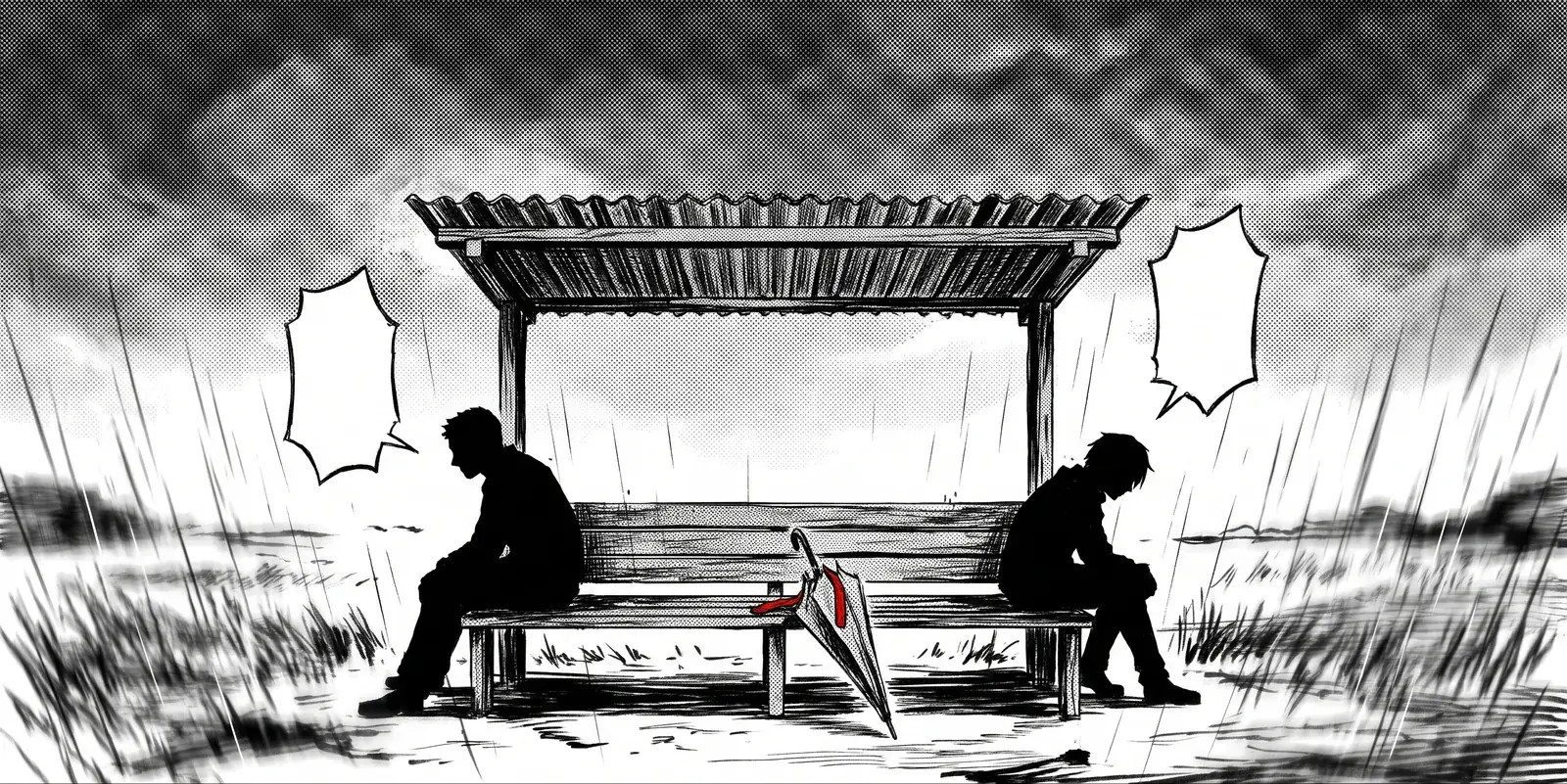
Film has a clock. Manga doesn’t. The reader decides how long to look at each panel, and your job is to steer that decision without them noticing. A wide, wordless panel says “stay here”. A row of small ones says “faster, faster”.
One scene, paced two ways
Mina finds out her best friend Jun is moving away. Here is the scene rushed:
Rushed: Panel 1: Jun says “I’m moving to Osaka.” Panel 2: Mina says “What? When?” Panel 3: Jun says “Next week.” Panel 4: Mina cries. Every beat gets the same size and the same weight, so nothing lands.
Paced: Panel 1, small: Jun says “I’m moving to Osaka.” Panel 2, small: Mina’s drink, the straw halfway to her mouth. Panel 3, wide and silent: the two of them at the bus stop, rain, a long gap between them on the bench. Panel 4, small: “…When?” The silence did the crying for her.
Tools that control time
- Panel size. Bigger panels hold the eye longer. Save them for the moments that matter.
- Silent panels. A panel with no words lets the reader feel what the characters can’t say.
- Beat panels. A tiny panel of a hand, a cup or a clock is a breath before the next line.
- The page turn. In printed manga, the first panel after a turn is a surprise slot. Put reveals there.
- The scroll gap. In a webtoon, empty space between panels is a pause. Longer gap, longer pause.
Pace a page in four moves
Find the one moment on the page that matters most. Give it the biggest panel.
Put a beat panel right before it. A small, quiet image the eye passes through on the way in.
Cut words from the big moment. If the picture says it, delete the line.
Speed up the rest. Smaller panels and shorter lines for everything that just moves the scene along.
Feel the rhythm on your own pages
MangaOra plans varied page layouts for you, with wide silent panels and small beat panels, and you can change any page before it is drawn. When a moment needs a different camera, direct the shot for that one panel.
Have a quiet moment that deserves room? Draw it free.
Questions people ask
What is pacing in manga?
Pacing is how fast the reader moves through the story. In manga it is controlled mostly by panel size, the amount of text, silent panels and where page turns fall.
Why do manga use panels with no dialogue?
Silent panels slow the reader down and let emotion land without being explained. They often hit harder than any line of dialogue could.
How many panels should a manga page have?
Most pages use three to seven. Fewer, larger panels slow the story down; more, smaller panels speed it up.