
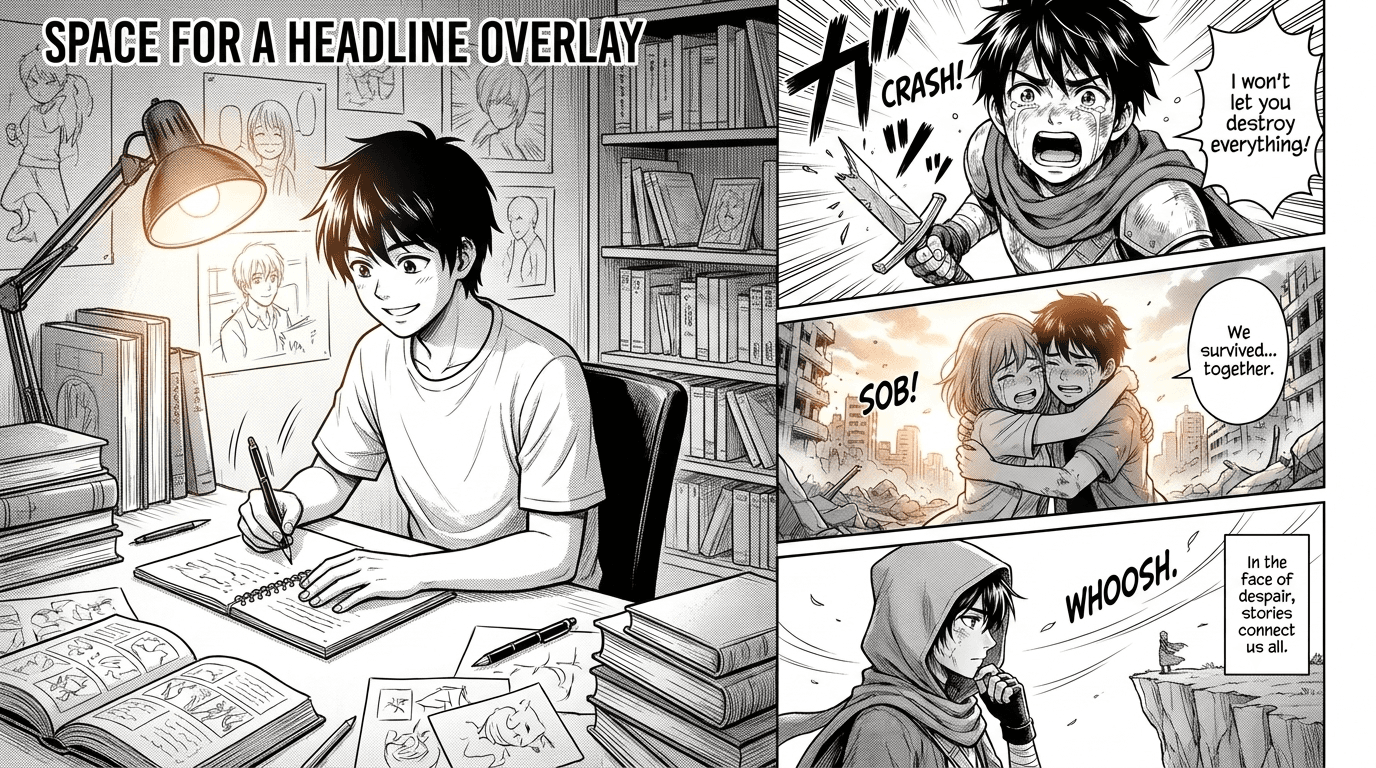
Why Storytelling Matters More Than Perfect Art in Manga and Comics
Great manga and comics are built on story first. Learn why visual storytelling, character stakes, and clear conflict matter more than a huge art budget—and how writers can create manga today.
Readers follow stories, not sketchbooks
The most shared manga and comics are not always the most technically polished—they are the ones where readers care what happens next. A clear goal, a meaningful relationship, or a mystery worth solving keeps people scrolling long after they notice a rough panel edge. Visual storytelling is the craft of making emotion, conflict, and change visible on the page. When the story works, readers forgive imperfection. When the story is thin, no amount of beautiful art saves the chapter.
If you are a writer who always imagined your work as manga or a webtoon, that is good news. Your strength is already the part that matters most. The art is how the story reaches the eye—but the story is why anyone stays.
What makes visual storytelling work
Strong visual stories share a few habits: every scene changes something (information, trust, danger, desire), characters want something specific, and the world feels particular—not interchangeable. Dialogue reveals personality; silence sells impact; panel order controls rhythm. A café conversation can carry as much tension as a sword fight if the relationship stakes are real.
Before you worry about camera angles or style references, ask: What does my protagonist want in this chapter? What could they lose? What will be different by the last panel? Answering those questions gives you a spine that panel prompts and scripts can hang on.
Why “I can’t draw” stopped being a dead end
For decades, turning a novel or script into manga meant hiring an artist or learning years of draftsmanship. AI-assisted creation removes that gate without removing the creator. You still decide plot, pacing, dialogue, and what each panel must show. The tool renders; you direct.
MangaOra is built for that division of labor: Studio helps you shape chapters and scripts, assign characters to panels, keep faces consistent with references, and export finished pages. Writers who never held a pen for comics can now produce readable, shareable manga—and iterate until the story feels right.
Story first, then panels
The best workflow starts with premise and chapter outline, not random image generation. Define your cast, their relationships, and the turning points of each chapter. Then break scenes into panels: who is visible, what they say, what the reader should feel. When structure leads, AI art supports the narrative instead of replacing it.
Liora (on Pro and Studio plans) can help you stress-test premises, pacing, and world details inside Studio—but your taste still chooses what ships. Storytelling remains yours; the platform handles repetition, consistency, and production speed.
Start where your strength is
If you already write—fanfiction, novels, scripts, or long-form notes—you are closer to a manga than you think. Paste your idea into Studio, create characters with distinct names and backgrounds tied to your setting, and generate one scene you care about. Compare it to generating random “cool anime art.” The difference is night and day: one is a story; the other is wallpaper.
Ready to put story first? Try MangaOra free: build a book in Studio, plan a chapter, and turn your words into panels readers can actually follow.