
AI Manga Scripts & Prompts for Cinematic Visuals in 2026 (Shot Grammar That Scales)
Level up searchable prompt craft lens language blocking emotional beats typography rhythm and repeatable shot grammar for sequential AI artwork that feels directed not random.
Prompting caught up with cinema literacy
Creators querying ai manga prompting guide 2026 want language borrowed from cinematography—not bag-of-adjectives soup. Readers reward intentional camera grammar even if subconsciously articulated.
Think in verbs: elevate, crane, smash cut implied by juxtaposition lingering insert prop emotional pivot. Embedding those verbs tells diffusion models latent structure reducing mangled anatomy incidents.
Layer prompts like a screenplay stack
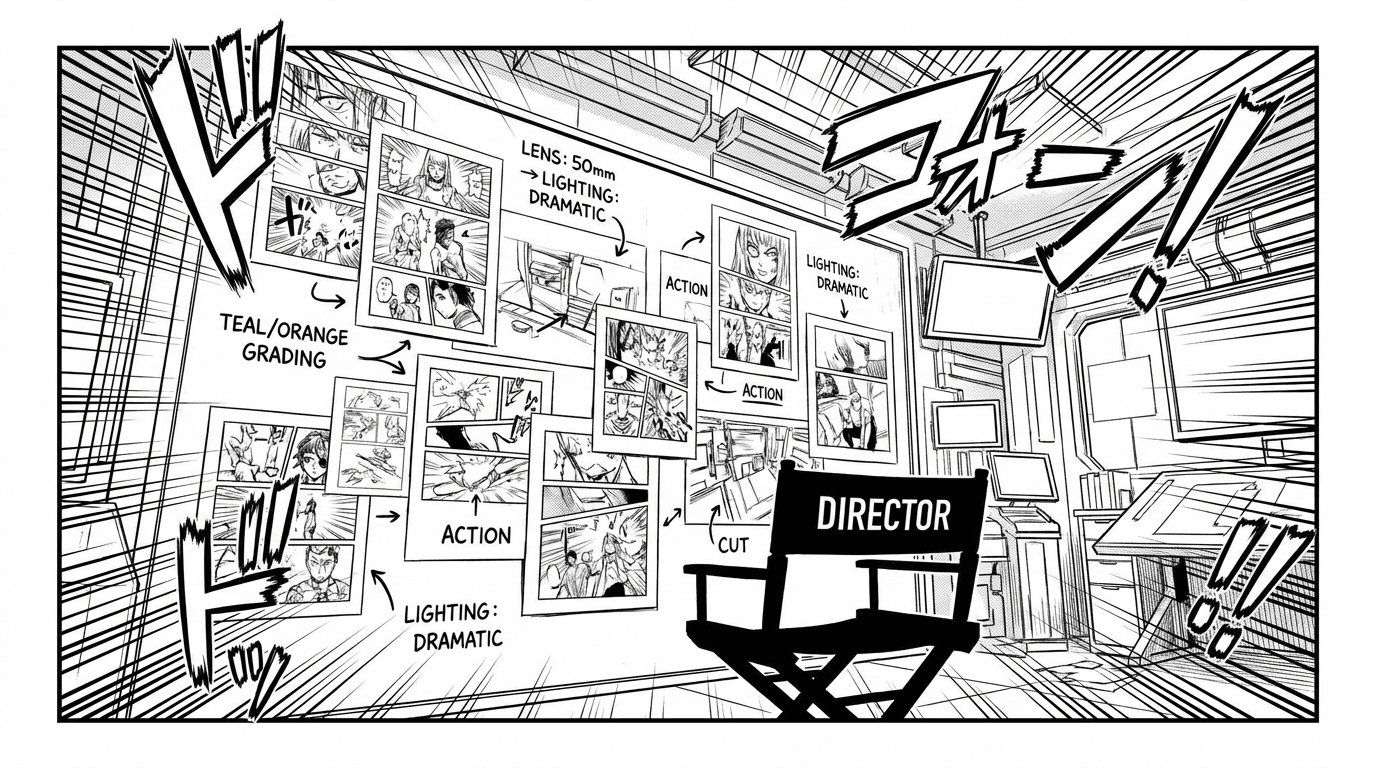
Stack prompts like screenplay layers. First paragraph: atmospheric intent—palette, time of day, weather, emotional baseline. Second: spatial blocking, who faces whom, anchor props and sightlines. Third: micro choreography for eyes, hands, jaws, eyebrows—where the joke or punch lands bodily.
Avoid scattering contradictory lighting instructions split conflicting goals across sequential regenerate passes instead forcing one hallucination salad.
Light as emotional instrument
Describe motivated sources practical window moon rim studio bounce colour temperature interplay shadows cutting faces readers psychologically associate cool tone unease amber relief.
Tie palettes to arcs so chapter thirteen climax inherits earlier chromatic symbolism AI references maintain continuity when prompts echo prior hex cues.
Lens personality without optical jargon overdose
Wide establishes geography telephoto compression heightens voyeur intimacy normal lens approximates human presence choose one dominant optical trait per beat.
If readers feel spatially lost tighten focal discipline before escalating action complexity choreography confusion amplifies exponentially.
Dialogue pacing vs panel breathing
Micro silent panels decompress tension let faces sell subtext overcrowding balloons weakens climax reserve verbosity for transformational lines.
When you rewrite balloons, feed the model succinct emotional intentions per balloon—not entire novellas—so diffusion cues stay focused on mouth shapes and gestures.
Continuity breadcrumbs inside prompts
Reference costume damage continuity explicitly after violent scenes chipped armour torn hem subtle scar adds temporal realism readers subconsciously crave.
Track props as plot debt—lost pendant must reappear logically notes inside Studio reduce retcon friction.
Failure taxonomy accelerates mastery
Classify flops: anatomical hallucination conflicting depth-of-field tonal drift prop continuity dialogue overcrowding diagnosing category guides next regenerate micro tweak avoiding thrash guessing.
Maintain personal prompt changelog snippet library accelerates searchable internal documentation future collaborators inherit wisdom.
Human taste still directs
AI proposes infinite variations taste selects ruthless economy best panel economy wins monthly deadlines taste is trainable annotate why winners succeeded embed reasoning into future prompts reinforcing loop.
Readers reward directed inevitability each frame feeling inevitable yet surprising craft illusion momentum.
Using MangaOra structures deliberately
Studio stitches scripts, panels, casts, references, and exports into one iterative workspace so prompts never float untethered from story structure—Liora (on eligible plans) can riff on beats while you retain final blocking authority.
Keywords spike traffic briefly; disciplined habits accumulate authority. Search engines favour depth—which is why exhaustive prompting drafts look almost embarrassingly verbose until you realise they shave regenerations downstream.
Print your favourite paragraphs aloud: rhythm exposes awkward balloons before pixels burn credits, catching stiff dialogue early when fixes are cheap.